

Table of Contents
Most sugar relationships that fail in Latin America do not end due to lack of resources or physical incompatibility. They end because of avoidable mistakes that sugar daddys They commit over and over again, often without realizing it. After years of observing these dynamics in different countries in the region, I can identify clear patterns that separate those who build genuine connections from those who repeat the same mistakes.

The interesting thing is that these mistakes are not exclusive to newbies. Men with business experience, used to negotiating and leading teams, trip over the same stones when they enter the world of sugar dating. The reason? They assume that skills that work in the professional arena automatically translate to the emotional and relational arena. Not so. Sugar relationships require a different set of skills, particularly in the Latin American context where cultural dynamics add layers of complexity that many underestimate.
This article is not intended to point fingers or moralize. The objective is practical: to identify the four most common mistakes and offer concrete alternatives to avoid them. If you are considering entering sugar dating or already have experience but feel that something is not quite working, the following could save you unnecessary frustration.
Assuming that expectations work the same throughout Latin America
This first mistake is as common as it is underestimated. Many sugar daddies operate under the assumption that there is a universal formula: offer support, receive companionship, done. But expectations vary dramatically not only between countries, but even between cities in the same country. A young woman in Buenos Aires is likely to have very different expectations from one in Quito or Cartagena, and not recognizing this creates friction from the start.

In cosmopolitan cities like Mexico City, Bogota or São Paulo, where female economic independence has grown significantly, many sugar babies are looking for more than material support. They want connections that complement their lives, not define them. They are professionals, graduate students or entrepreneurs who value their autonomy and expect that autonomy to be respected. A sugar daddy who arrives with a paternalistic attitude or assuming total dependence immediately clashes with this reality.
On the other hand, in more traditional contexts -specific areas of Ecuador, Venezuela or medium-sized cities in Mexico- the weight of family and social expectations changes the equation. There, «what people will say» still matters a lot, and a sugar relationship must be handled with greater discretion. Not because she is necessarily embarrassed, but because the social consequences of being perceived in this type of relationship can affect her family or professional environment in ways that a foreign sugar daddy is unlikely to understand.

The mistake is in not asking. It seems obvious, but most misunderstandings would be avoided with an honest conversation at the beginning: what is everyone looking for, what expectations do you have about frequency of meetings, communication, level of emotional involvement? Explore the different types of relationships that exist in this world helps to establish a common framework before problems arise.
I have to be blunt: assuming without asking is a form of arrogance, even if unintentional. The sugar daddy who thinks he knows what she wants without bothering to find out is projecting his own expectations onto another person. And when those projections don't match reality, the result is mutual frustration.
The solution does not require becoming a cultural anthropologist. Simply ask open-ended questions and listen to the answers without filtering them through prior assumptions. Do you come from a traditional or more liberal family? What level of privacy do you need to maintain? Are you looking for mentoring, occasional companionship, or something closer to a conventional relationship? The answers to these questions should shape the approach, not a generic formula intended to work in all contexts.
Ask before assuming
Expectations vary according to city, family context and personal aspirations. What works in a cosmopolitan metropolis may fail in more traditional contexts. An honest conversation at the outset avoids misunderstandings that are difficult to repair later.
Recognizes its autonomy
Many Latin American sugar babies are professionals or students with their own projects. They are not looking for someone to «rescue» them, but for quality companionship to complement lives already under construction. Respecting that autonomy is a basic requirement.
Consider the social context
In some Latin American regions, social judgment still weighs heavily. It is not a matter of hiding the relationship out of shame, but of understanding that she may need to manage discretion for legitimate family or professional reasons.
Underestimating the importance of everyday communication
The second mistake is to treat communication as secondary or transactional. Many sugar daddies, particularly those with demanding professional schedules, fall into the pattern of sporadic and superficial messages: a «hello» every three days, logistical confirmations for meetings, and little else. This approach may work in purely transactional relationships, but sugar dating rarely is.
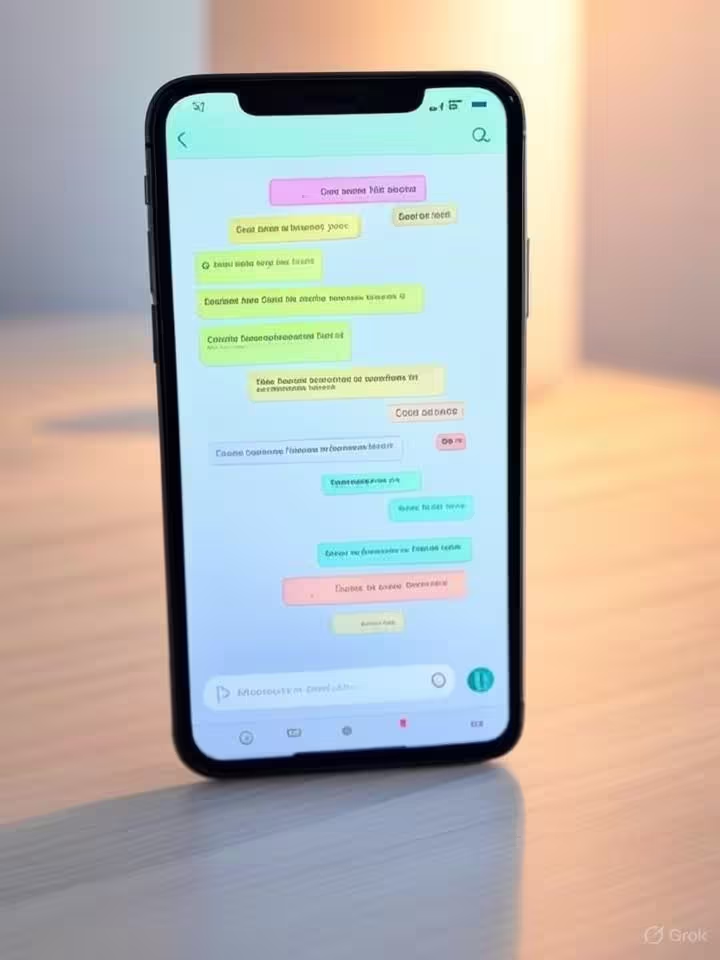
In Latin America, where WhatsApp has become the primary channel for personal communication - more so than phone calls or any other app - the frequency and quality of messages communicates interest. Or lack thereof. A sugar baby receiving spaced monosyllables interprets, correctly in most cases, that it is not a priority. And when someone feels they are not a priority, the bond erodes quickly.
This doesn't mean you should bombard with constant messages. That's the other extreme, equally problematic. The key is consistency and qualityShow genuine interest in her day, remember details she mentioned earlier, share something of your own life beyond the logistical. A message asking how that job presentation she mentioned last week went communicates more than twenty generic «hi, how are you?».
The medium also matters. While WhatsApp dominates, some prefer more visual communication via Instagram or even occasional voice calls. Ask what she prefers and adapt your style. In cultures like Colombian or Dominican, where verbal warmth is part of the social code, a voice message can generate more connection than a written text. In more reserved contexts, such as Chilean or Argentinean circles, a well-written text may be more appropriate.
The underlying error here is to think that inter-meeting communication is optional or secondary. It is not. It is the connective tissue that keeps the relationship alive. Building a lasting relationship requires constant communicative investment, not just occasional gestures during face-to-face meetings.
I also observe sugar daddies who make the opposite mistake: excessive communication that feels like surveillance. Constant messages asking where she is, who she is with, what she is doing. This quickly crosses over into controlling territory, which we will address in the next point. The balance is in showing interest without smothering, being present without invading.
On platforms such as Sugar Daddy Latam, where many Latin American connections begin, the transition from internal chat to WhatsApp or other personal channels often marks a turning point. Those who manage that transition well, establishing healthy communication patterns from the start, tend to build stronger relationships than those who leave communication to chance.
The line between generosity and control
This third error is perhaps the most delicate and the one that causes the most damage when it is committed. It consists of using the support given as leverage to exert control over the other person's life. It is not always intentional-many sugar daddies do not recognize that they are crossing this line-but the effect is equally damaging.

The manifestations are varied: demanding to know where he is at all times, giving opinions about his friendships, getting upset when he has plans that do not include him, using phrases such as «after all I do for you» to generate guilt. These behaviors transform what should be a mutually beneficial relationship into an unbalanced power dynamic where she feels more like an employee than a partner.
In the Latin American context, this takes on particular nuances. On the one hand, there are cultural traditions where a certain level of male «protection» is normalized. On the other, new generations of Latin American women are actively rejecting these patterns, seeking relationships - including sugar daddies - where their autonomy is respected. A sugar daddy who confuses generosity with the right to control is operating under an outdated model that generates rejection.
Genuine generosity is empowering. Supporting someone's studies without demanding grade reports. Collaborate with a venture without pretending to lead it. Celebrating professional achievements without feeling threatened by their growth. This is the difference between an emotionally mature sugar daddy and one who uses support as a tool of control.
I have known cases where the confusion between generosity and control destroyed relationships that had genuine potential. A businessman in Monterrey who started out supporting his sugar baby's fashion business ended up demanding to approve every business decision. A relationship in Lima that started out well deteriorated when he began questioning every outing with girlfriends. The pattern repeats itself: confusing the role of support with that of supervisor.
The solution requires honest self-reflection. Does it bother you that she has an independent social life? Do you feel the need to know what she does when you are not together? Do you use the support you provide as an argument in discussions? If the answers are yes, the problem is not with her but with your own expectations that need to be revised. Maintaining healthy boundaries applies to both parties to the relationship.
Ignorance of the differences between Latin American countries

The fourth mistake is to treat «Latin America» as a homogeneous bloc. To an outside observer, it may seem that we share a common language and certain cultural traditions, therefore we are the same. Nothing could be further from the truth. The differences between countries - and even between regions within the same country - are substantial and directly affect how sugar relations work.
Argentina, for example, has an intense conversational culture where psychological analysis of relationships is almost a national sport. A porteño sugar baby is likely to expect deep conversations about emotions, expectations and relationship dynamics. Approaching the relationship superficially or avoiding these topics is perceived as lack of interest or emotional immaturity.
Colombia presents another profile. The warmth of the paisa in Medellín or the effusiveness of the coast in Cartagena and Barranquilla contrast with the more reserved style of the interior. Colombian sugar babies generally value charisma, good humor and spontaneity. Excessive formality can be interpreted as coldness or distance.
Chile has more reserved social codes, influenced by European traditions. The process of building trust tends to be more gradual, and the immediate effusiveness typical of other Latin American cultures can be perceived as invasive. Patience and respect for personal space tend to work better than attempts at accelerated closeness.
Mexico is a universe unto itself in its size and internal diversity. Mexico City offers cosmopolitan sophistication comparable to any global metropolis. Guadalajara maintains more traditional values with touches of modernity. Monterrey has a strong business culture. Tourist destinations such as Cancun or Los Cabos operate under completely different dynamics, influenced by the international flow.
The mistake is in applying the same strategy in all these contexts. What works to connect with a professional in Bogota may fail completely with a student in Buenos Aires or an entrepreneur in Santiago. Understanding these differences does not require being an expert in every culture, but it does imply the humility to recognize that there is no universal formula.
The practical recommendation is simple: ask about her specific context: What are the social dynamics like in her city? What are her family values? What previous experiences have shaped her expectations? This genuine curiosity not only gives you useful information but demonstrates real interest in getting to know her as an individual, not as a representative of a category.
Argentina: deep conversation
Porteño culture values analysis and reflection on relationships. It expects conversations about expectations, emotions and dynamics. Avoiding these topics or treating them superficially can be interpreted as a lack of emotional maturity or genuine disinterest.
Colombia: warmth and spontaneity
Both paisa and costeña cultures emphasize charisma and good humor. Excessive formality can be perceived as coldness. Colombian sugar babies generally respond well to spontaneity and shared social experiences.
Chile: patience and space
Chilean social codes tend to be more reserved. Trust is built gradually and immediate effusiveness can be invasive. Respecting personal space and allowing closeness to develop naturally often works best.
Emotional maturity as a determining factor

Beyond avoiding specific mistakes, there is an underlying factor that separates successful sugar daddies from those who repeatedly fail: emotional maturity. It is not enough to have financial stability, social presence or life experience. Without the emotional intelligence to handle the complexities inherent in these types of relationships, the aforementioned mistakes will inevitably be repeated.
Emotional maturity involves several competencies. First, the ability to recognize and manage one's own insecurities. Do you feel threatened when she demonstrates independence? Do you interpret her active social life as a sign of disinterest? These reactions speak more to your own insecurities than to real problems in the relationship.
Second, the ability to communicate needs and limits assertively, without resorting to manipulation, ultimatums or passive aggressiveness. If something makes you uncomfortable, express it directly but respectfully. If you notice that the dynamic is not working, have the honesty to talk about it before resentment builds up.
Third, manage realistic expectations. Sugar dating is not a transaction where the support provided guarantees specific behaviors. It is a relationship between two adults with its own complexities, where the ideal exchange benefits both but requires constant negotiation and flexibility.
Fourth, the ability to accept that not all relationships will work out, and that this does not represent personal failure. Sometimes the chemistry is off, the expectations are incompatible, or the timing just doesn't match. An emotionally mature sugar daddy can recognize this and end relationships that don't work without unnecessary drama.
Building more authentic sugar relationships
Constant communication
Having regular and meaningful conversations strengthens the emotional connection. It's not just about sending messages to arrange meetings, but about sharing experiences, opinions and interests. Young Latin American women appreciate it when a sugar daddy takes the time to really get to know them, beyond appearances.
Authenticity in treatment
Being genuine in your intentions and actions creates a solid foundation for the relationship. Women can quickly detect when someone is feigning interest or just looking to fulfill a superficial role. Honesty about what you are looking for and what you can offer sets clear expectations from the start.
Personal appraisal
Recognizing and celebrating your sugar baby's accomplishments, aspirations and unique qualities shows that you see her as a whole person, not just a companion. This recognition can be expressed through support for her personal projects, words of encouragement or simply remembering important details of her life.
If you have identified any of these errors in your own behavior, the next step is to implement concrete changes. This is not radical transformation but conscious adjustments that gradually improve the quality of your relationships.
Start with self-reflection. Before entering into any new sugar relationship, ask yourself honestly what you're looking for: Occasional companionship? Emotional connection in addition to the practical arrangement? Mutual mentoring? Clarifying this internally allows you to communicate it more accurately externally.
Invest time in genuinely getting to know the person in front of you. Not as a «sugar baby» but as a complete individual with a history, aspirations, fears and dreams of his or her own. The details you discover-their career goals, their interests, their values-not only enrich conversations but demonstrate interest that transcends the superficial.
Establish explicit agreements about communication, frequency of meetings, level of discretion required, and any other relevant issues. Misunderstandings arise when these issues are assumed rather than discussed. A somewhat awkward conversation at the beginning prevents much more uncomfortable conflicts later.
Maintain cultural flexibility. If you are interacting with someone from a different context than your own-another country, another city, another socioeconomic environment-assume there will be differences in expectations and values. Question rather than assume, and adapt your approach according to what you learn.
Finally, practice generosity without expectations of control. The support you provide should empower, not create dependency. If you notice that you use support as leverage to influence behavior, acknowledge it and correct it. Genuine generosity does not come with implied conditions.
Frequently Asked Questions
Realistic expectations recognize that you are interacting with another autonomous person, not purchasing a service. If you expect total availability, control over their free time or guaranteed specific behaviors, those expectations are likely to generate conflict. Successful sugar relationships work when both parties are clear about what they offer and what they expect to receive, with flexibility to adjust as the relationship evolves.
The first step is to recognize it, which you have already done. Next, identify what insecurity is motivating the behavior: Fear of being replaced? Need for constant validation? Work on those underlying causes, ideally with professional help if the pattern persists. In the meantime, set internal boundaries: before asking where he is or with whom, ask yourself if you really need that information or if it's anxiety talking.
Generally yes, although the stage of life is more important than the exact age. A college student will have different priorities and availability than an established professional in her thirties. Younger women may value new experiences and mentoring, while older women tend to seek more balanced dynamics where both parties contribute from different places. The important thing is not to assume: ask what she is specifically looking for.
Understand their reasons without taking it personally. In many Latin American contexts, discretion protects your family or professional reputation in ways that matter. If the difference in need for privacy is too great for you, it is legitimate to seek someone with more aligned expectations. But forcing her to expose herself more than she is comfortable with will inevitably damage the relationship.
It happens more often than many anticipate. When two people share time, experiences and vulnerability, emotional bonds develop naturally. If this happens, honesty is key: talk openly about what it means to both of you and how you want to proceed. Some relationships transition successfully to more traditional formats; others work better by maintaining the original structure.
Final reflection
The four mistakes described in this article-assuming universal expectations, neglecting communication, confusing generosity with control, and ignoring cultural differences-are not unique to sugar dating. They are human errors that appear in all types of relationships. The difference is that in the sugar context, where power dynamics and material expectations add complexity, these mistakes are magnified and their consequences appear more quickly.
The good news is that these are correctable errors. They do not require radical personality transformation or years of therapy. They require conscious attention, a willingness to listen, and the humility to recognize that there is no universal formula that works for all people in all contexts.
If you identified with any of these patterns, the next step is simple: in your next interaction, whether with a new connection or with someone you already know, practice the opposite of the mistake you identified. Ask rather than assume. Communicate with consistency. Support without controlling. Tailor your approach to the specific context. The results will speak for themselves.


 Español
  Português do Brasil
  English
2 comments:
Luisa
7 February, 2025 at 2:31 am
Sugar daddies must understand that being a successful sugar daddy involves attitude, confidence and offering more than just money. By following these tips, you will improve your chances in the sugar dating world and enjoy more satisfying relationships with young women who value your company.
BjAlex
8 February, 2025 at 5:13 am
Excellent article, many interesting tips and valuable information to learn and take into account, thanks to the creator for excellent article and to the site for allowing its publication 👏🏻💯💯🔥